

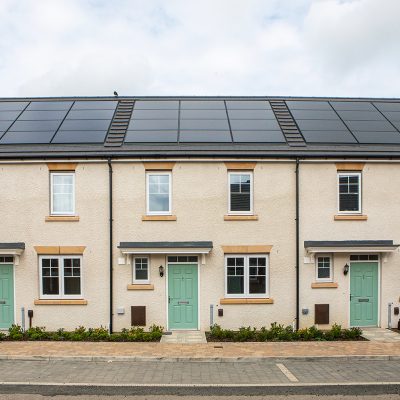
Cardiff-based energy services provider Sero has invited volunteers to move into three purpose-built houses in Cardiff and take part in a government-funded experiment in automating their use of electricity and heating at home for energy cost benefits.
The demo at a trio of purpose-built houses at The Mill housing development site in Cardiff will be followed in Autumn by a further 46 houses at a separate site, Parc Eirin in Tonyrefail, according to Sero’s August 25 statement.
The Mill site is being developed by Tirion Homes, a Cardiff-based non-profit developing regular and affordable housing at the site including social rented, discounted rent, intermediate rent, market rent and open market sale.
In total, 225 such houses will participate in the project, which Sero called the largest of its kind.
Aim to eliminate fuel poverty
Sero is providing the new residents with an “intelligent home comfort service” through a smartphone app.
The project will integrate the collaborators’ digital and non-digital systems to avoid peak prices for domestic energy consumers while providing a set price for their heat and power fuel bills.
By networking homes, the project partners aim to achieve “stable monthly bills” through control of domestic appliances, heating, photovoltaic generation and battery storage.
Ground source heat pumps, solar PV panels and energy storage will also be deployed.
Sero said, “Using residents’ preferences – such as their chosen room temperature, hot water needs and overall lifestyle – Sero will forecast energy demands as well as generation using intelligent software. This will control in-home energy storage to shift the impact of energy demands on the grid, using factors like weather and behaviours, to inform the algorithms that run the systems.”
Sero said it plans to manage the energy systems of the homes, buy energy at cheaper times and pass on the benefits of grid balancing payments to consumers.
"This will enable energy demands to be effectively matched to grid generation – reducing both carbon emissions and the cost of energy to occupants," said Sero.
Sero hopes the whole system will be “imperceptible” to residents while dropping the cost of energy for the homes, excluding management costs, by “more than half”.
Other industry partners involved in the project include Berkshire-based company PassivSystems, which is providing smart energy management software and UK energy supplier Octopus Energy, which is providing renewable energy on a half-hour basis as well as software interfacing technology. Newport-based third-sector developer Pobl Group, regional network operator Western Power Distribution and Oxfordshire-based hot water tank provider Mixergy are also involved.
BEIS funds
The three-home demand-side response feasibility study is one of 20 awarded funding from the Department of Business, Energy & Industrial Strategy (BEIS) through a £0.55 million domestic demand-side response competition.
The project, called Flatline (Fixed Level Affordable Tariffs Led by Intelligently Networked Energy), was the recipient of a £22,246 grant from the ministry.
It was proposed by Sero in partnership with German solar battery company Sonnen.
Image credit: Sero